Traditional pulse reference
Tympanic Pulse
Tympanic
A terminology and study guide for the traditional description, comparison points, and safety limits of this pulse quality.
Reader guide
A pulse term is not a diagnosis
Traditional pulse descriptions are educational terminology. A pulse finding can vary with pressure, rate, position, posture, activity, medication, age, and the examiner's technique. It must be interpreted with a complete history and examination.
TRADITIONAL DESCRIPTION
How the Pulse Is Described
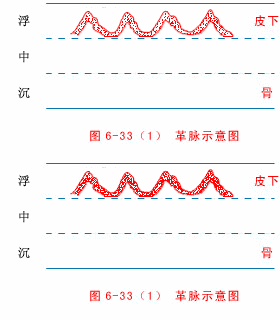
A tympanic pulse is large, taut, and superficial but feels hollow when pressed more deeply.
Traditional contexts include exterior cold and deficiency of blood or essence.
COMPARISON
What to Compare
Compare hollow depth with empty and soft qualities; a tense surface does not necessarily indicate excess.
- Record pressure level, rate, regularity, width, and strength instead of relying on one label.
- Interpret the pulse alongside symptoms, history, medication, age, posture, stress, and recent activity.
- Do not convert a traditional pulse term into a modern diagnosis without appropriate examination.
SAFETY BOUNDARY
When Not to Rely on a Pulse Record
Bleeding, pregnancy concerns, severe weakness, or acute pain needs professional evaluation.
Pulse education can explain terminology, but it cannot replace an ECG, laboratory testing, imaging, or an in-person clinical assessment.