Traditional pulse reference
Hollow Pulse
Hollow
A terminology and study guide for the traditional description, comparison points, and safety limits of this pulse quality.
Reader guide
A pulse term is not a diagnosis
Traditional pulse descriptions are educational terminology. A pulse finding can vary with pressure, rate, position, posture, activity, medication, age, and the examiner's technique. It must be interpreted with a complete history and examination.
TRADITIONAL DESCRIPTION
How the Pulse Is Described
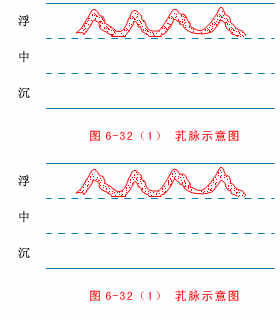
A hollow pulse is present at the surface and depth but feels empty in the middle, like a scallion stalk.
Traditional contexts focus on loss of blood or fluids and require a search for the underlying cause.
COMPARISON
What to Compare
Distinguish hollow from empty and choppy qualities by the central void and surface tension.
- Record pressure level, rate, regularity, width, and strength instead of relying on one label.
- Interpret the pulse alongside symptoms, history, medication, age, posture, stress, and recent activity.
- Do not convert a traditional pulse term into a modern diagnosis without appropriate examination.
SAFETY BOUNDARY
When Not to Rely on a Pulse Record
Visible bleeding, black stools, fainting, or pregnancy-related bleeding requires urgent care.
Pulse education can explain terminology, but it cannot replace an ECG, laboratory testing, imaging, or an in-person clinical assessment.