Traditional pulse reference
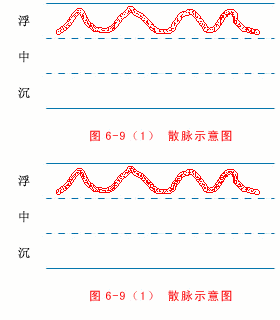
Scattered Pulse
Scattered
A terminology and study guide for the traditional description, comparison points, and safety limits of this pulse quality.
Reader guide
A pulse term is not a diagnosis
Traditional pulse descriptions are educational terminology. A pulse finding can vary with pressure, rate, position, posture, activity, medication, age, and the examiner's technique. It must be interpreted with a complete history and examination.
TRADITIONAL DESCRIPTION
How the Pulse Is Described
A scattered pulse feels superficial and disorganized, gradually becoming empty with medium pressure and disappearing deeper.
Traditional texts treat it as a sign of weakened root or serious depletion, not as a routine wellness label.
COMPARISON
What to Compare
Compare scattered with floating, faint, and empty qualities across pressure levels.
- Record pressure level, rate, regularity, width, and strength instead of relying on one label.
- Interpret the pulse alongside symptoms, history, medication, age, posture, stress, and recent activity.
- Do not convert a traditional pulse term into a modern diagnosis without appropriate examination.
SAFETY BOUNDARY
When Not to Rely on a Pulse Record
Collapse, severe weakness, breathlessness, or confusion requires emergency care.
Pulse education can explain terminology, but it cannot replace an ECG, laboratory testing, imaging, or an in-person clinical assessment.